
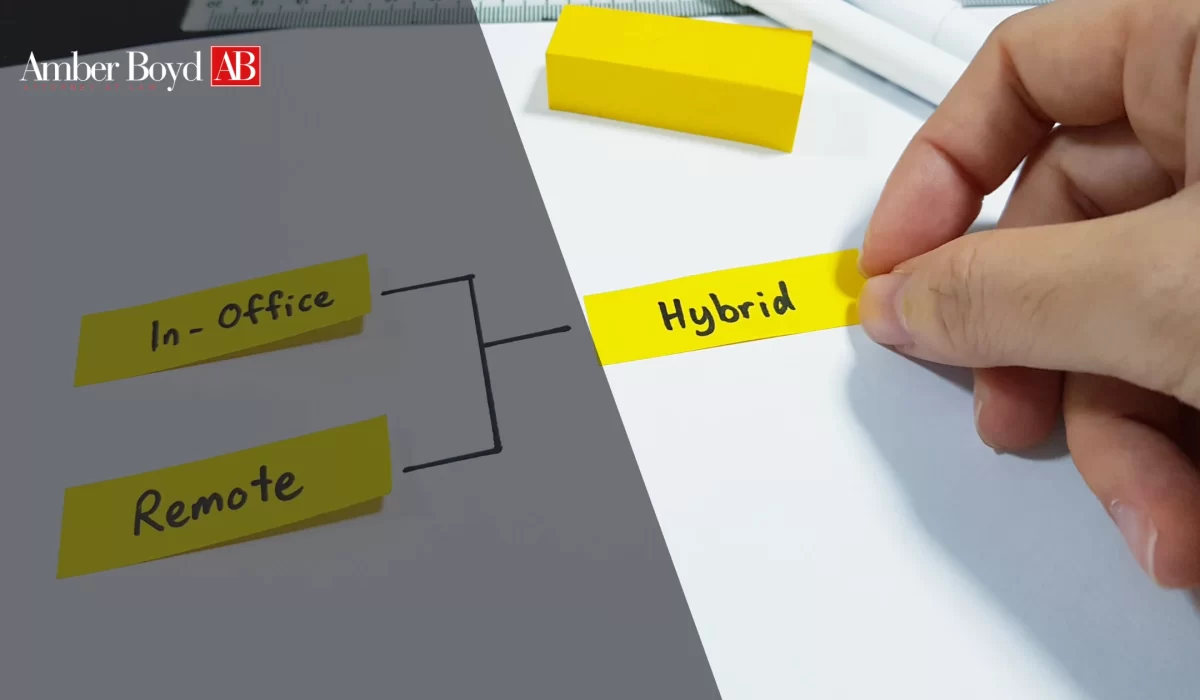
Indiana employers spent five years building remote teams. In 2026, many are pulling that flexibility back, and the rollback is creating real legal issues. Remote work discrimination in Indiana shows up in return-to-office mandates that hit caregivers, disabled employees, and religious minorities harder than others. It shows up in promotion decisions that quietly favor in-office staff. It shows up in AI monitoring tools that score remote workers against rules the office never sees.
Our Indiana team handles these claims regularly. The workplace discrimination overview and the Indiana employment lawyer page are starting points. The AI in the workplace page covers the monitoring angle in depth.
Why Is Remote Work a Civil Rights Issue Now?
The shift from “remote by default” to “back in seats” is not neutral. Workers who relied on remote setups for medical, caregiving, or religious reasons feel the change first. Surveys consistently show women, disabled employees, and workers over 50 placing higher value on remote options than men under 35.
When an employer enforces a five-day RTO mandate without accommodation analysis, two legal hooks tend to follow: disparate impact under Title VII and failure to accommodate under the ADA. The PWFA adds protections for pregnant workers who need remote options.
What Does “Disparate Impact” Mean for RTO Policies?
Disparate impact is a Title VII theory. The employer’s policy looks neutral on paper but hits one protected group much harder than another. A blanket five-day RTO mandate that ends up firing far more women with young children, or workers with chronic illnesses, can fall into this category.
The framework runs in three steps:
- Plaintiff shows the disparate impact. Numbers, attrition rates, opt-out data.
- Employer shows business necessity. Why does the role require five days in person?
- Plaintiff shows a less discriminatory alternative. Could a hybrid model meet the same goal?
Many RTO policies survive this test. Some do not. Documentation of the rollout, who left, and what reasons were given matters. Our discrimination rights overview walks through how disparate impact fits in.
How Does the ADA Treat Remote Work as an Accommodation?
The ADA requires employers with 15 or more workers to offer reasonable accommodations to qualified employees with disabilities, unless doing so would create undue hardship. Remote or hybrid work is one possible accommodation. It is not automatic.
The analysis is fact-specific. Key questions include:
- What are the essential functions of the role?
- Can they be performed remotely?
- Did the employee perform them remotely for years already?
- What hardship would remote work create now that was acceptable before?
If the employer already proved the role could be done from home during the pandemic, refusing remote work as an accommodation gets harder to justify. The EEOC has issued post-2020 guidance recognizing that long stretches of successful remote work weigh against employer claims of business necessity.
How to Request a Remote Work Accommodation
The request itself matters. To trigger ADA protection:
- Put the request in writing.
- Tie it to a medical condition (you do not need to disclose diagnosis specifics yet).
- Identify the accommodation you want (full remote, hybrid, modified schedule).
- Offer to provide medical documentation if the employer requests it.
- Engage in the interactive process the law requires.
What About Caregivers and Working Parents?
Caregiver status alone is not a federally protected class. The pattern still matters. When RTO policies cluster their impact on working mothers, the case can move forward under sex discrimination theories. The EEOC has issued caregiver guidance that lays out how sex-based stereotypes about parents can lead to Title VII violations.
Pregnancy and lactation get explicit protections. The Pregnant Workers Fairness Act requires reasonable accommodations, including remote arrangements when appropriate. The PUMP Act protects nursing workers, and remote work often dovetails with these needs. Our PUMP Act page and pregnancy discrimination page cover the specifics.
How Does the FMLA Intersect With Remote Work?
The FMLA provides 12 weeks of unpaid leave for qualifying medical and family reasons. Some workers also need ongoing flexibility, including intermittent leave or modified schedules. Remote work can sometimes accommodate intermittent flare-ups in ways the office cannot.
FMLA itself does not require employers to allow remote work. But denying remote arrangements right after FMLA leave can support a retaliation claim, especially when timing and comparator evidence suggest the leave triggered the change. Our FMLA 12-week guide, common FMLA mistakes, and medical leave handling guide cover the interactions.
What Is Religious Accommodation in a Hybrid Setting?
Title VII requires reasonable accommodation for religious practices. A worker who needs Friday afternoons free for prayer, or whose faith treats certain holidays as sacred, may have a stronger case for remote or schedule flexibility. The Supreme Court’s recent Groff v. DeJoy decision raised the employer’s burden, requiring real evidence of significant difficulty or expense to deny accommodation.
Our religious accommodation page covers the framework and recent shifts.
How Does Proximity Bias Affect Promotions and Evaluations?
Proximity bias is the tendency to evaluate workers you see daily more favorably than workers you do not see. Studies before and after 2020 consistently show in-office employees promoted at higher rates than remote employees doing equivalent work.
That gap alone is not unlawful. The legal hook appears when the in-office population skews along protected lines and the remote population skews the other way. Patterns that should raise concern:
- Promotions concentrated among in-office men while remote women lag
- Performance reviews that praise visibility instead of output
- Project assignments routed only to workers physically present
- Compensation increases tied informally to “face time”
Documentation matters. Save reviews, project lists, and compensation data over time. Our evidence playbook shows how to build a record.
What About AI Monitoring and Productivity Software?
Many employers added webcam tracking, keystroke loggers, mouse-jiggle detection, and AI productivity scoring during the remote shift. The tools are not inherently illegal in Indiana, but they create discrimination exposure when:
- Scoring penalizes disability-related work patterns (vision impairment, ADHD, chronic pain)
- Activity windows ignore caregiving breaks while crediting other absences
- AI ranking systems show statistical bias by race, sex, or age
- Monitoring is applied to remote workers only and not in-office staff
Indiana legislators have started examining AI workplace rules. Our AI regulation in the workplace page tracks the evolving landscape, and the 2026 year review covers recent regulatory shifts.
How Does Indiana Law Treat Remote-Work Issues?
Indiana is an at-will employment state. Employers can generally change job locations and demand in-office work. The protections come from federal civil rights statutes and Indiana’s anti-discrimination law administered by the Indiana Civil Rights Commission.
When changes feel retaliatory, see our retaliation overview and post-complaint protections page. When the change effectively forces resignation, see our constructive discharge page.
Comparison of Common Remote-Work Scenarios
| Scenario | Possible Legal Theory | Key Evidence |
|---|---|---|
| RTO mandate rejected for disability accommodation | ADA failure to accommodate | Written request, medical records, prior remote performance |
| Working mother fired after pushback on RTO | Title VII sex discrimination | Attrition data, comparators, statements about parenting |
| Pregnant worker denied remote during high-risk period | PWFA, Title VII | Doctor letters, accommodation request, employer response |
| Religious worker denied flexibility for prayer or holiday | Title VII religious accommodation | Written request, prior practice, burden analysis |
| Remote worker passed over for promotion repeatedly | Disparate treatment or impact | Promotion records, performance reviews, statistics |
| AI monitoring scores disable worker as “low effort” | ADA disparate impact | Monitoring outputs, prior reviews, system documentation |
| FMLA returnee told to return in-office only | FMLA retaliation | Pre-leave arrangement, timing, comparator treatment |
“Many clients come in convinced the law lets employers do whatever they want about location. Sometimes it does. Often, the pattern of who is hurt by a policy is exactly what civil rights law was written to address.”
What Should You Do if You Suspect Remote-Work Discrimination?
- Put your accommodation request in writing. Email beats verbal in every case.
- Save the employer’s response. Especially any rejection or partial accommodation.
- Document the rollout of the policy. Announcements, town halls, internal FAQ pages.
- Track who is affected and how. Names, departments, accommodations approved or denied.
- Preserve performance reviews and project records. Especially side-by-side with in-office comparators.
- Capture AI monitoring outputs. Screenshots, ranking emails, productivity reports.
- Watch for retaliation. Schedule changes, exclusion from meetings, removed projects.
- Talk to a lawyer before quitting. Constructive discharge analysis matters.
Industries to watch closely include healthcare, education, and technology. Our pages for healthcare workers and teachers cover sector-specific accommodation rules.
What Are the Filing Steps and Deadlines?
Most claims start at the EEOC or the Indiana Civil Rights Commission. Title VII charges generally must be filed within 300 days. ICRC charges typically within 180. FMLA claims have a separate two-year window (three for willful violations).
For step-by-step filing guidance, see our EEOC guide, claim deadlines guide, and the Indiana complaint walkthrough. The official EEOC charge filing page shows the federal process.
What Damages Can You Recover?
Title VII, the ADA, and the PWFA all provide back pay, front pay, emotional distress, punitive damages (subject to caps), and attorney fees. FMLA damages run on a separate framework focused on lost compensation and benefits. Our Indiana damages page shows recent ranges.
Should You Negotiate a Hybrid Severance Package?
If you face the choice between accepting an RTO mandate that does not work for you and leaving, severance terms matter. A well-negotiated package can preserve health coverage, secure pay continuation, and leave certain claims open. Review our 2026 severance guide and negotiation playbook before signing anything.
Frequently Asked Questions About Remote Work Discrimination in Indiana
Can my Indiana employer force me back to the office full-time?
Generally yes, because Indiana is an at-will state. The employer’s discretion shrinks when an RTO mandate disproportionately harms a protected group, denies a reasonable accommodation under the ADA or PWFA, or retaliates against protected activity.
Is remote work a reasonable accommodation under the ADA?
It can be. The analysis depends on essential job functions, prior remote performance, and any business hardship. When you have already done the job remotely successfully, the employer’s denial becomes harder to defend.
My RTO mandate hits working mothers hardest. Is that illegal?
Possibly. Disparate impact under Title VII covers neutral-looking policies that disproportionately affect a protected group. Statistics, attrition data, and comparator evidence help build the case.
What if my employer denied my accommodation request?
Get the denial in writing. Document the interactive process steps. Then consult a lawyer about filing an EEOC charge or ICRC complaint within the applicable deadlines.
Can AI productivity tools discriminate against me?
Yes, in legal terms. If the scoring penalizes disability-related work patterns or skews by race, sex, or age, it can support a disparate impact or failure-to-accommodate claim. Save the outputs and review them with counsel.
What if I am passed over for promotion because I work remotely?
Proximity bias alone is not illegal. Patterns that line up with protected status are. Compare promotion data with the demographics of in-office versus remote staff and watch for review language that praises “face time.”
Does the FMLA require my employer to let me work from home?
No. The FMLA grants leave, not remote work. But denying remote work right after FMLA leave can support a retaliation theory, especially when timing and comparators point in that direction.
Can my employer monitor me at home?
Generally yes, with proper notice. The line moves when monitoring captures protected health information, breaches reasonable privacy expectations, or feeds biased AI systems. Indiana law continues to evolve on this.
What if I quit because the RTO order made my job impossible?
You may have a constructive discharge claim if the conditions were intolerable and the employer ignored reasonable accommodation requests. Talk to a lawyer before resigning so you preserve the necessary record.
Should I sign a severance offered with an RTO mandate?
Not before a careful review. Severance offers often release valuable claims. Our 2026 severance guide and negotiation playbook walk through the levers most workers miss before signing.
Talk to an Indiana Remote Work Discrimination Attorney
If you face an RTO mandate, a denied accommodation, or a monitoring tool that does not fit how you work, you may have legal options. Remote work discrimination in Indiana is one of the fastest-moving areas of employment law in 2026, and the steps you take this month often shape the outcome.
Amber Boyd Law represents Indiana employees in remote-work, hybrid, and accommodation disputes. Call (317) 960-5070, visit our contact page, schedule a first consultation, or stop by 8506 Evergreen Ave, Indianapolis, IN 46240. You can also read more about our firm and meet our team.
Disclaimer – This article is intended for general educational purposes only and does not constitute legal advice. For guidance specific to your situation, please consult a qualified Indiana employment attorney.