
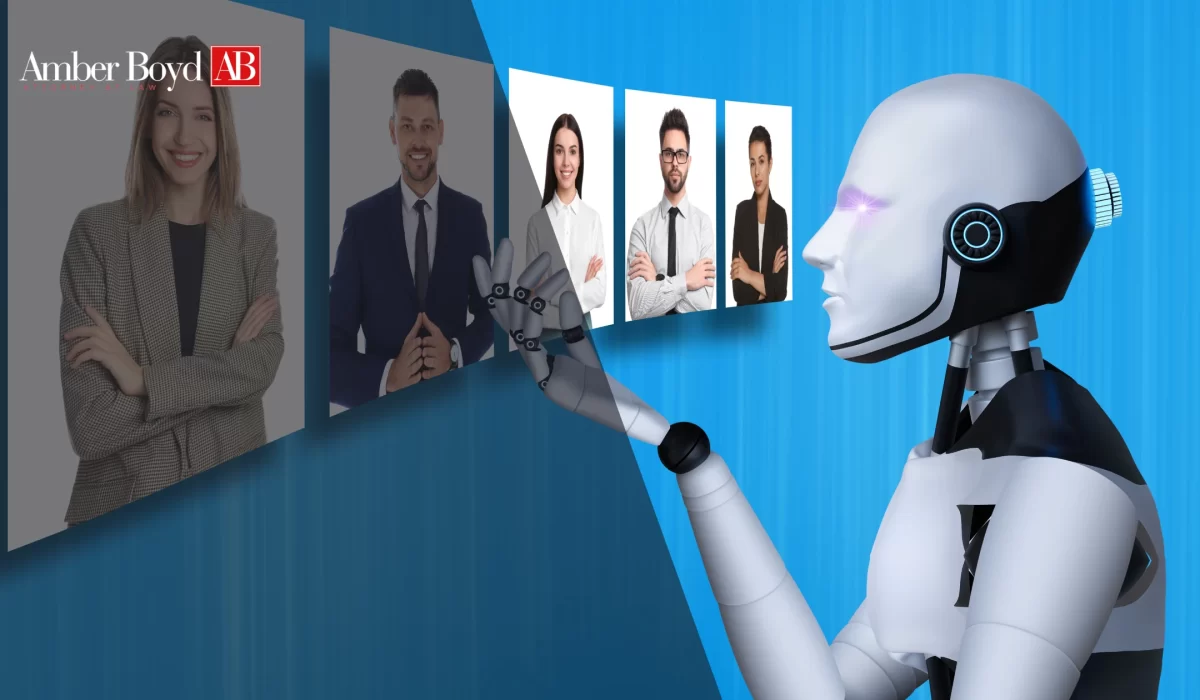
You submitted a strong application. You have the experience, the credentials, and the qualifications the job posting asked for. But you never heard back. No interview. No explanation. Just silence.
More and more job seekers are discovering that a human never even reviewed their application. An algorithm made the decision first, and in many cases, that algorithm made the decision permanently.
This is the new reality of AI discrimination in hiring, and it is raising serious legal questions for workers across Indiana and the entire country. If an automated system screened you out because of your name, your age, your zip code, or patterns tied to your race or disability, that may not just be unfair. It may be illegal.
This guide breaks down how AI hiring tools work, where discrimination hides inside them, what the law currently says, and what your options are if you believe you were unlawfully excluded from a job opportunity.
If you are navigating a situation like this right now, the team at Amber Boyd Law is here to help you understand your rights as an Indiana employee.
How Are Employers Using AI in the Hiring Process?
Artificial intelligence has entered nearly every stage of modern recruitment. Understanding where it operates helps you identify where discrimination may have occurred.
What Does AI Actually Do During Hiring?
AI hiring tools perform a wide range of functions that used to involve human judgment. These include:
- Resume screening software that filters applications based on keywords, formatting patterns, or predictive scoring models
- Automated video interview analysis that scores candidates based on facial expressions, tone of voice, and word choice
- Chatbot-based pre-screening that asks candidates questions and ranks their answers algorithmically
- Predictive hiring scores built from historical employment data to forecast job performance or retention
- Social media scraping tools that pull publicly available data to build candidate profiles
- Background check algorithms that flag candidates based on data patterns rather than direct human review
Many large employers, staffing agencies, and even mid-sized companies now use at least one of these tools before a human recruiter sees your name.
Why Are Companies Adopting These Tools So Quickly?
The appeal is efficiency. Employers receive hundreds or thousands of applications for a single position. AI tools promise to narrow that pool faster, cheaper, and more consistently than human reviewers.
The problem is that these systems are only as fair as the data they were trained on, and the processes that designed them. When those inputs carry bias, the output carries bias too.
What Is AI Discrimination in Hiring and Why Does It Happen?
AI discrimination in hiring occurs when an automated tool produces outcomes that disadvantage applicants based on protected characteristics, even when the tool never explicitly considers those characteristics.
This is known as disparate impact discrimination. You do not need to prove that an employer intended to discriminate. You only need to show that a practice disproportionately harmed a protected group without a legitimate, job-related justification.
Where Does Bias Enter an Algorithm?
Bias is not always programmed in deliberately. It often enters through the data used to build the system.
| Source of Algorithmic Bias | How It Causes Discrimination | Who It Often Harms |
|---|---|---|
| Historical hiring data | Trains the algorithm to replicate past patterns, including discriminatory ones | Women, minorities, older workers |
| Zip code or location data | Proxies for race or socioeconomic background | Black and Latino applicants |
| Name-based pattern recognition | Penalizes names associated with certain ethnic groups | Applicants of color |
| Gap in employment history | Penalizes caregiving-related gaps disproportionately | Women, caregivers |
| Video interview AI scoring | Misreads non-Western facial expressions or accents | Non-white and non-native English speakers |
| Personality assessment algorithms | Screens out traits that correlate with certain disabilities | People with disabilities |
A well-documented example involved Amazon, which scrapped its own internal AI recruiting tool after discovering it was systematically downgrading resumes that included the word “women’s,” such as “women’s chess club captain.” The system had been trained on a decade of hiring data, and that data reflected a male-dominated workforce.
Does Intent Matter in Discrimination Law?
This is one of the most important questions in AI hiring discrimination cases. Under federal law, including Title VII of the Civil Rights Act of 1964, a practice does not need to be intentionally discriminatory to violate the law. If the practice produces a discriminatory outcome, that is enough to raise a legal claim.
This is why AI discrimination cases are legally viable even when an employer claims they had no discriminatory intent. The algorithm’s results are what matter.
To learn more about how Indiana employment discrimination law works, visit our workplace discrimination overview.
What Federal Laws Apply to AI Discrimination in Hiring?
Several existing federal laws apply directly to AI hiring tools, even though none were written with algorithms in mind. Regulatory agencies have worked to clarify how these laws extend to automated decision-making.
Title VII of the Civil Rights Act
Title VII prohibits employment discrimination based on race, color, religion, sex, and national origin. The Equal Employment Opportunity Commission (EEOC) has confirmed that this law applies to AI tools that produce discriminatory outcomes in hiring, promotion, or termination decisions.
In 2023, the EEOC released guidance specifically addressing how employers may violate Title VII through the use of automated hiring systems, even when those systems are purchased from third-party vendors.
The Americans with Disabilities Act
The Americans with Disabilities Act (ADA) prohibits discrimination against qualified individuals with disabilities. AI tools that screen out applicants based on personality traits, cognitive patterns, or behavioral data tied to a disability may violate the ADA.
The EEOC has raised specific concerns about AI-driven personality assessments that penalize traits associated with certain mental health conditions.
The Age Discrimination in Employment Act
The Age Discrimination in Employment Act (ADEA) protects workers 40 and older from age-based discrimination. Resume screening tools that filter out graduation years, employment gaps, or certain technology skills may disproportionately exclude older workers.
The Equal Pay Act and OFCCP Regulations
Federal contractors face additional requirements under the Office of Federal Contract Compliance Programs (OFCCP), which has taken steps to require auditing of AI hiring tools for discriminatory impact.
For a full breakdown of the employment laws that protect Indiana workers, visit our Indiana employment laws guide.
What Has the EEOC Said About AI and Hiring Discrimination?
The EEOC has been increasingly vocal about algorithmic discrimination. Their position is clear: employers cannot outsource their legal obligations to a software vendor.
“An employer may be liable under federal EEO laws for using an automated decision-making tool that has an adverse impact on a protected class, even if the tool was developed by a third-party vendor.” – EEOC Technical Assistance Guidance, 2023
This is critical for job seekers to understand. If an employer tells you they simply used a software program and cannot be held responsible for its decisions, that is not legally accurate under current EEOC guidance.
What Does the EEOC Require Employers to Do?
Under the EEOC’s current framework, employers using AI hiring tools are expected to:
- Conduct regular audits for disparate impact across protected classes
- Provide reasonable accommodations to applicants who cannot effectively use or be fairly assessed by the AI tool
- Ensure that AI tools only screen for job-related criteria
- Not rely solely on AI decisions without any human oversight
- Be transparent with applicants about whether automated tools were used
These requirements are evolving, but they create a foundation for legal claims when employers fail to meet them.
Is Indiana Moving Toward AI Hiring Regulations?
Indiana does not currently have a state-specific AI hiring law, but workers in the state are protected by the federal statutes described above. Several other states have moved faster on this issue, which may signal where Indiana law is heading.
What Are Other States Doing?
Illinois passed the Artificial Intelligence Video Interview Act, which requires employers to notify applicants when AI is used to analyze video interviews and to explain how the AI works. New York City enacted Local Law 144, requiring employers to audit AI hiring tools annually for bias.
These developments are important because they reflect a growing legal consensus that AI hiring tools require external accountability, not just the vendor’s word that the system is fair.
What Can Indiana Workers Do Right Now?
Even without a state-specific AI law, Indiana workers can file discrimination claims under federal law. If an AI tool produced an outcome that disproportionately affected you based on a protected characteristic, you may have the grounds for an EEOC complaint or a civil lawsuit.
Our EEOC complaint guide for Indiana explains exactly how that process works step by step.
You can also review the latest updates to Indiana employment law in our 2025 year-in-review for Indiana employment law changes.
What Types of Discrimination Are Most Common in AI Hiring?
Certain protected groups face disproportionate harm from AI hiring tools based on documented patterns in research and enforcement actions.
Race and National Origin Discrimination
Studies have shown that resumes with names perceived as Black or Latino receive fewer callbacks than identical resumes with names perceived as white. When AI tools are trained on this historical data, they learn and replicate this pattern. Geographic data, school names, and community organization affiliations can all serve as proxies for race.
Age Discrimination Through AI Filtering
Older workers often face AI screening that penalizes career gaps, older education dates, legacy job titles, or experience with technologies that have since been replaced. If you are over 40 and believe you were screened out for any of these reasons, speak with an Indiana employment lawyer about whether the ADEA protects your situation.
Disability Discrimination in Automated Assessments
Personality-based assessments and behavioral screening tools increasingly serve as gatekeepers in hiring. Some of these tools penalize cognitive or behavioral traits that may be associated with ADHD, autism spectrum disorder, depression, or anxiety. This can create illegal barriers under the ADA before a person ever speaks with a human recruiter.
Gender Discrimination in Resume Screening
Resume screening systems trained on historically male-dominated workforces have been shown to penalize signals associated with women, including career gaps, language patterns tied to caregiving experience, and even certain formatting styles. For more on how gender-based discrimination works under Indiana law, visit our Indiana pregnancy discrimination page.
How Do You Know if AI Rejected Your Application?
This is one of the most frustrating aspects of AI discrimination in hiring: you often cannot tell what happened. Employers are not generally required to disclose that an AI tool was used, though some states are beginning to change that.
Signs That an Algorithm May Have Filtered Your Application
- You received an automated rejection within minutes or hours of submitting your application
- You were highly qualified but never received an interview callback
- You applied multiple times to the same employer with no response
- You were asked to complete an online assessment or video interview as the first step
- You received generic rejection language with no specific feedback
Can You Request to Know What Tool Was Used?
In most states, including Indiana, there is currently no legal requirement for employers to disclose which AI tools they used. However, if you file an EEOC complaint, the investigation process may compel the employer to produce information about their screening methods.
This is why documenting your application process carefully matters enormously from the start. Our guide on documenting workplace issues in Indiana offers practical advice on building your record.
What Are the Legal Standards for Proving AI Hiring Discrimination?
Proving discrimination in an AI context follows a similar legal framework to traditional discrimination claims, with some added complexity around access to data.
The Disparate Impact Framework
Under disparate impact theory, you need to show:
- A specific employment practice (the AI tool)
- A statistically significant adverse effect on a protected class
- A causal connection between the practice and the adverse effect
Once you show this, the burden shifts to the employer to demonstrate that the practice is job-related and consistent with business necessity. If the employer cannot do that, or if you can show a less discriminatory alternative exists, the claim can succeed.
The Disparate Treatment Framework
If you can show evidence that an employer intentionally used an AI tool knowing it would screen out a protected class, that is disparate treatment discrimination. This standard is harder to meet but carries the same legal consequences.
Why These Cases Require an Attorney
AI discrimination cases often require access to data, technical analysis, and expert testimony that is difficult to obtain without legal support. Employers will frequently resist producing information about their proprietary tools. An experienced Indiana employment attorney can use the discovery process to obtain what you need.
You can learn more about how the discrimination claim process works by reviewing our guide on how to file a discrimination complaint in Indiana.
What Damages Could You Recover in an AI Discrimination Claim?
If your claim is successful, the damages available to you depend on the type of discrimination and the size of the employer. Generally speaking, you may be entitled to recover:
- Back pay: Wages you would have earned if you had been hired
- Front pay: Future earnings losses caused by the discriminatory rejection
- Compensatory damages: For emotional distress and other harms
- Punitive damages: In cases involving intentional or reckless discrimination
- Attorney’s fees and costs: Often recoverable in successful employment discrimination cases
For a deeper look at how damages work in Indiana discrimination cases, visit our discrimination damages and payout examples page.
What Steps Should You Take if You Suspect AI Discrimination in Hiring?
If you believe an algorithm may have screened you out based on a protected characteristic, here is a practical path forward.
Step 1: Document Everything
Save copies of your application, the job posting, any automated communications you received, and screenshots of any assessments you completed. Record the date and time of your application and any rejections. This documentation forms the foundation of your potential claim.
Step 2: Research the Employer’s Tools
Many companies publicly disclose their use of specific AI hiring platforms. Search for news articles, vendor relationships, or legal filings involving the employer. Some AI hiring companies have faced regulatory scrutiny, and public records may be available.
Step 3: Compare Outcomes if Possible
If you know other applicants, particularly from different demographic groups, who applied for the same position and had different outcomes, document that information. Comparative evidence can be powerful in discrimination claims.
Step 4: File an EEOC Charge
Before you can file a federal discrimination lawsuit, you must file a charge with the EEOC. Deadlines apply, and in Indiana you generally have 300 days from the discriminatory act to file. Missing this deadline could bar your claim entirely.
Our detailed EEOC complaint guide for Indiana walks through every step of that process. You should also review Indiana employment law claim deadlines to make sure you act within the required timeframe.
Step 5: Consult an Indiana Employment Attorney
An AI discrimination claim is complex. The earlier you speak with an attorney, the better your chances of preserving your rights and building a strong case. A consultation with Amber Boyd Law can help you understand whether your situation warrants a legal claim and what your options are.
What Are Employers Legally Required to Offer as Accommodations?
Under the ADA, employers must provide reasonable accommodations to applicants with disabilities during the hiring process. This extends to AI-based hiring tools.
If you have a disability that affects your ability to complete an automated video interview, a timed online assessment, or any other AI-based screening tool, you have the right to request an alternative format or accommodation. Refusing to provide one may constitute disability discrimination independent of any algorithmic bias.
Learn more about how workplace accommodations work under Indiana law by visiting our Indiana workplace discrimination rights guide.
Does AI Discrimination Happen After Hiring Too?
Yes. While this guide focuses on pre-hire screening, AI tools are increasingly used in decisions about promotions, performance evaluations, scheduling, and even termination. Discrimination law applies to these decisions as well.
If you are currently employed and believe an automated system is affecting your assignments, pay, or opportunities for advancement in a discriminatory way, that may also give rise to a legal claim. Visit our retaliation page if you have also experienced pushback after raising concerns about unfair treatment, and review our section on wrongful termination exceptions in Indiana if automated decisions contributed to losing your job.
Our team also handles cases involving AI regulation and workplace rights for Indiana workers.
Common Myths About AI Hiring Discrimination
There are several misconceptions that prevent workers from pursuing legitimate claims. Here are the ones that come up most often.
Myth: “If a computer made the decision, no one discriminated against me.”
Reality: Employers are legally responsible for the tools they use. Using an AI tool does not transfer legal liability to the software company. The employer chose to use the tool and is accountable for its outcomes.
Myth: “I can’t prove it was discrimination if I don’t know what the algorithm did.”
Reality: You do not need to fully understand the algorithm’s code to file a claim. The legal discovery process can compel employers to produce documentation about how their tools work. Statistical analysis of outcomes across protected groups can support your claim.
Myth: “Discrimination only happens if someone treated me differently because of my race.”
Reality: Disparate impact discrimination does not require intentional targeting. A neutral-seeming practice that produces unequal outcomes for a protected group is still illegal discrimination under Title VII.
Myth: “I wasn’t hired, so there’s nothing to sue over.”
Reality: Failure to hire based on discrimination is absolutely a viable legal claim. You do not need to be an employee to be protected by employment discrimination laws during the application process.
Frequently Asked Questions About AI Discrimination in Hiring
Is it legal for companies to use AI to screen job applicants?
Currently, using AI hiring tools is legal. However, those tools must comply with federal anti-discrimination laws. If an AI tool produces outcomes that disproportionately harm protected groups, using it may violate Title VII, the ADA, or the ADEA, regardless of intent.
Can I file a discrimination claim if I never spoke to a human recruiter?
Yes. Discrimination protections apply throughout the hiring process, including automated screening stages. You do not need to have interacted with a human decision-maker for your rights to apply. An Indiana discrimination attorney can review the specific facts of your situation.
How do I prove that an algorithm discriminated against me?
Proof often involves statistical evidence showing disparate outcomes across protected groups, documentation of your qualifications versus the stated job requirements, and information about the AI tool itself obtained through legal discovery. An employment attorney can guide the evidence-gathering process.
What is the deadline to file an AI discrimination claim in Indiana?
You generally have 300 days from the discriminatory act to file a charge with the EEOC in Indiana. Missing this deadline can permanently bar your claim. Review the Indiana employment claim deadlines page and consult an attorney as soon as possible.
Does it matter if the employer used a third-party AI vendor?
No. Under EEOC guidance, employers remain legally responsible for the discriminatory impact of tools they choose to use, even if those tools were developed by an outside vendor. The employer cannot shift blame to a software company to avoid liability.
What if I was asked to take a personality or cognitive test and I have a disability?
You may be entitled to a reasonable accommodation under the ADA, such as an alternative format for the assessment. If the employer refused to provide one, that refusal may independently constitute disability discrimination. Visit our workplace discrimination page to understand your rights.
Can retaliation happen if I complain about AI discrimination?
Yes. If you raise concerns about discriminatory hiring practices and your employer responds by withdrawing a job offer, blacklisting you from future positions, or taking any adverse action, that could constitute retaliation. Visit our retaliation overview and our page on retaliation protections after complaints in Indiana for more information.
Are there any Indiana-specific laws addressing AI in hiring?
As of 2025, Indiana does not have a state-specific law governing AI hiring tools. However, Indiana workers are protected by federal anti-discrimination statutes. Our 2026 Indiana employment law changes overview tracks new developments as they emerge.
Can I sue even if I was not the only person discriminated against?
Yes, and in some cases being part of a larger affected group actually strengthens the claim. Class-action lawsuits involving AI hiring discrimination are an emerging area of employment law. Individual claims remain fully viable as well.
What does the first consultation with Amber Boyd Law involve?
During a consultation, you will discuss the facts of your situation with an attorney who can help you evaluate whether a viable discrimination claim exists, what evidence you should preserve, and what your options are moving forward. Visit our employment lawyer first consultation guide to know what to expect.
Ready to Find Out if Your Rights Were Violated?
AI discrimination in hiring is one of the fastest-growing areas of employment law. Algorithms are making decisions that affect people’s livelihoods, and the legal system has not always kept up. But that does not mean you are without options.
If you applied for a job in Indiana and believe you were screened out by an automated system in a way that may have been discriminatory, you deserve to have your situation evaluated by someone who knows employment law and takes your experience seriously.
At Amber Boyd Law, we represent Indiana workers who have faced unfair and unlawful treatment in the workplace and the hiring process. We take the time to listen, ask the right questions, and give you a clear picture of where you stand legally.
Call us at (317) 960-5070 or schedule your consultation online. You can also find us at our Indianapolis office, located at 8506-8510 Evergreen Ave, Indianapolis, IN 46240.
Find us on the map: Amber Boyd Law – Indianapolis Location
Do not wait. Deadlines in employment discrimination cases are strict, and acting early protects your rights. Let us help you understand what happened and what you can do about it.
Disclaimer: This article is intended for general educational purposes only and does not constitute legal advice. For guidance specific to your situation, please consult a qualified Indiana employment attorney.